
In an age where national resilience depends on a secure digital perimeter, cybersecurity education must evolve from a niche technical training into a critical pillar of national security.
Addressing the workforce emergency through cybersecurity education
The necessity of prioritizing education is most visible when examining the workforce emergency within our borders. Romania faces a shortage of specialized professionals required to secure its digital infrastructure. Without a national focus on scalable cybersecurity education, this labor shortage becomes an exploitable vulnerability: a single breach in our power grids, for example, could halt national productivity and drain millions from the economy. This domestic crisis reflects a broader global trend highlighted by the ISC2 Cybersecurity Workforce 2025 study [1], which reveals that nearly 60% of companies struggle with significant gaps in practical skills. This disconnect between theoretical knowledge and real-world application remains one of the greatest hurdles for the labor market.
Moreover, as the average cost of a data breach globally reaches $4.44 million [2], Romanian organizations find themselves under constant siege. This pressure is increased by malicious actors using AI to automate breaches, making highly skilled human specialists the only countermeasure capable of creative problem-solving that AI cannot replicate.
Compliance as catalyst for national cybersecurity defenses
This need for elite training is also a legal imperative for the Romanian public and private sectors. Frameworks such as NIS2 or DORA have moved national resilience into the realm of legal obligation, forcing essential Romanian sectors like finance, energy, and water distribution to adopt rigorous security postures.
However, a regulation is only as effective as the people implementing it. The human firewall needed to protect Romania’s critical infrastructure must be built through continuous education. This legislation serves as a national requirement for talent development, as Romanian companies can only meet these high standards if there is a domestic pipeline of qualified experts ready for these high-stakes roles.
Synergy across the public-private-academic sectors builds strong cybersecurity education
No single entity can bridge the talent gap in isolation, so the complexity of modern threats requires a deep, unified collaboration between the Romanian private sector, academia, and government agencies.
This synergy ensures that what is taught in classrooms is immediately applicable to the defense of the nation. When government, companies, and schools work together, they transform cybersecurity from a fragmented effort into a unified national defense strategy.
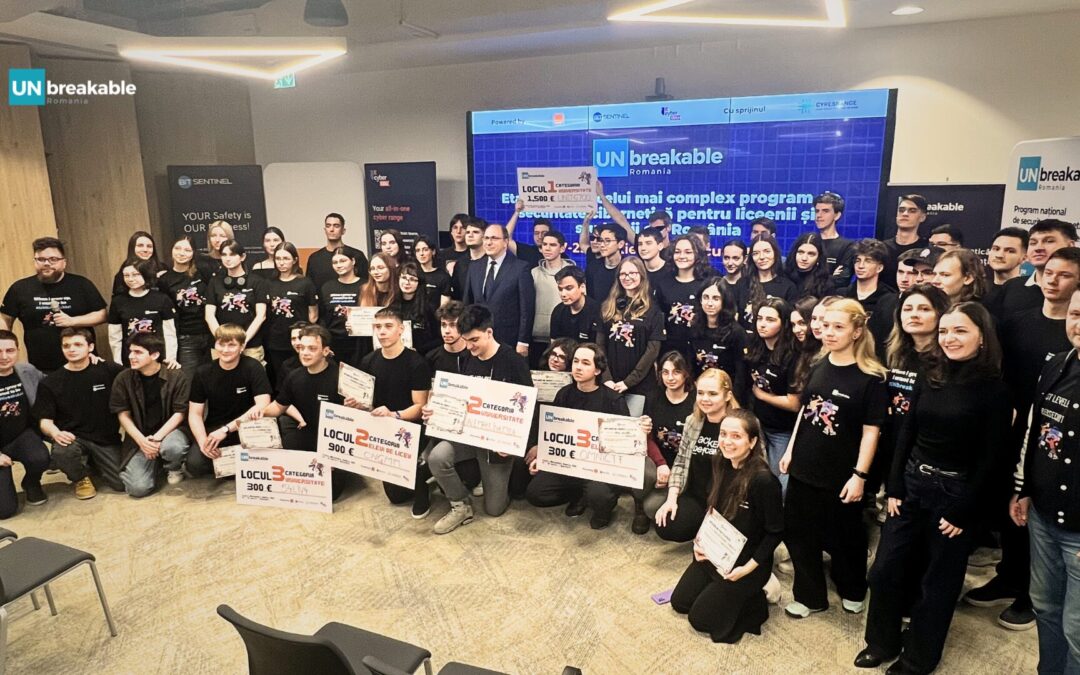
This alignment was highlighted at the UNbreakable Romania 2026 final, where the state officially recognized cyber-learning as a primary strategic asset for the country’s digital autonomy.
UNbreakable Romania – the use case for cybersecurity education
As we navigate the complex threat landscape of 2026, we see human expertise becoming a fundamental prerequisite for both state stability and economic health. This urgency is driven by a convergence of challenges: an unprecedented talent gap, the rapid weaponization of AI, and a tightening web of legislative requirements.
A prime example of a national initiative addressing such challenges is UNbreakable Romania, which has evolved into a strategic pillar for cultivating both elite digital defenders and offensive security specialists our nation needs.
UNbreakable Romania, organized by Bit Sentinel and Orange Romania with the support of CyberEDU, serves as the definitive case study for why education must be a national priority. Over 8 years, UNbreakable Romania has transformed the passion of 8,000 students from 20 universities and 150 high schools into a measurable national resource. Through 12 local competitions, 3 national finals, and 300 CyberEDU labs, the program delivered a high-pressure training environment mirroring the professional market. This year, diversity efforts expanded via the #GirlsInCyber Bootcamp, where 20 finalists selected from 100 applicants were mentored to ensure Romania’s defense draws from a diverse talent pool.
The 2026 edition also signaled a shift toward a new professional archetype: the expert who operates alongside AI. The finals proved that while AI drastically accelerates performance, foundational knowledge and critical thinking remain the deciding factors in modern cyber warfare. [3]
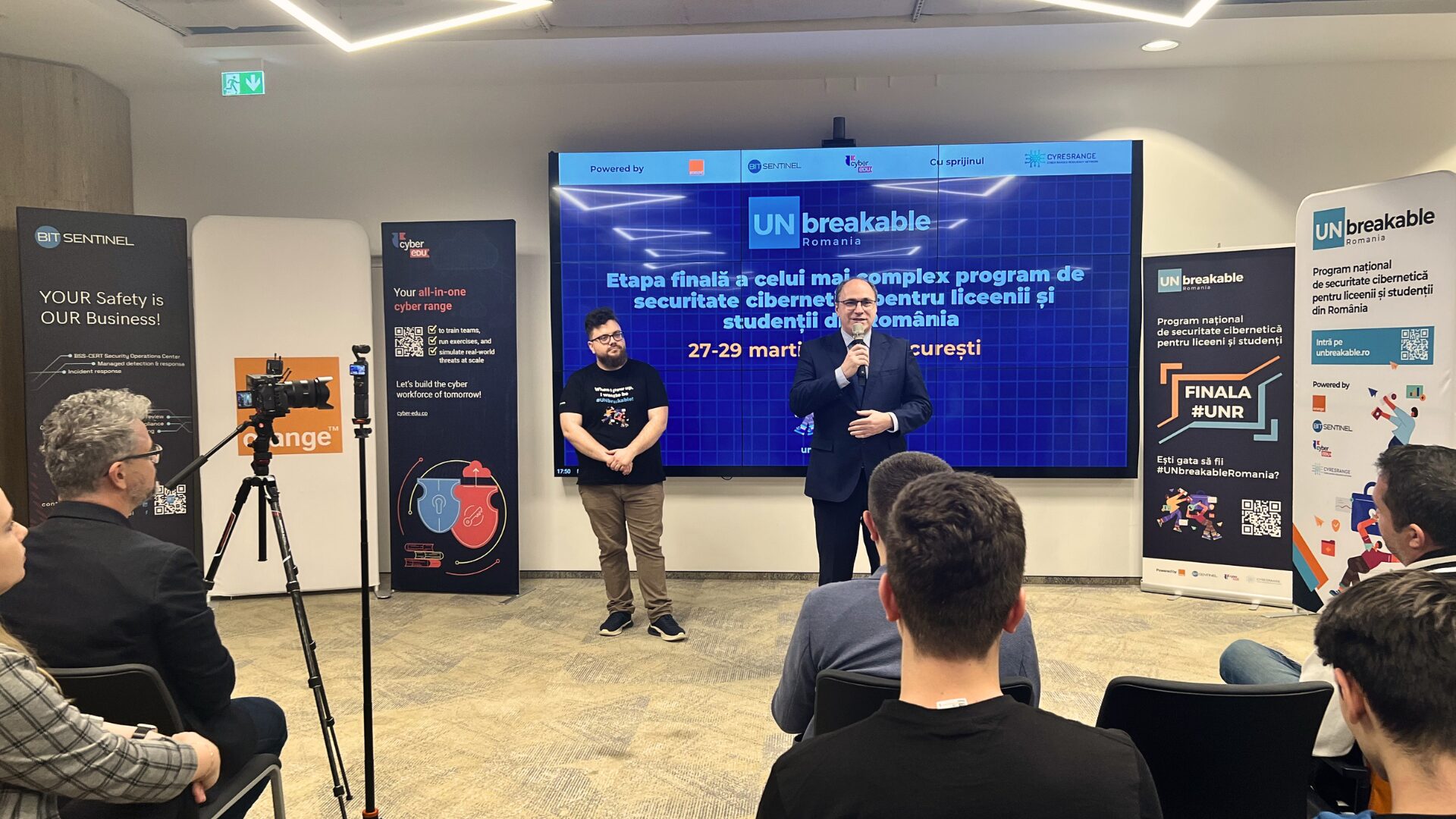
The impact of the educational model developed at UNbreakable Romania was validated by the Minister of Education, Mihai Dimian. The Minister emphasized that investing in education and digital skills is the only path toward securing Romania’s future, calling for a national educational system that is fully adapted to these new technological realities and reaffirming that the collaboration between the public sector, private companies, and academia is essential.
Securing the future through cybersecurity education
Ultimately, cybersecurity education is the only sustainable way to ensure Romania becomes a regional hub for digital talent. By investing in scalable programs and involving more demographics through initiatives like UNbreakable Romania, we are building a national shield against cybersecurity threats.
As Bit Sentinel advocates, education is the most powerful form of national defense. Our resilience is only as strong as the minds we train to protect it. For this reason, it is time to treat the development of Romanian cybersecurity talent with the same urgency as any other pillar of national security.
Resources:
[1] 2025 ISC2 Cybersecurity Workforce Study, https://www.isc2.org/Insights/2025/12/2025-ISC2-Cybersecurity-Workforce-Study
[2] What data leaders need to know from the Cost of a Data Breach Report 2025, https://www.ibm.com/think/insights/data-matters/cost-of-a-data-breach
[3] Lessons learned – while organising UNbreakable Romania Capture the Flag 2026 – on scalability, complexity, and AI, https://blog.cyber-edu.co/lessons-learned-while-organising-unbreakable-romania-capture-the-flag-2026-on-scalability-complexity-and-ai/



